Air conditioners have become an essential part of modern life, providing comfort, convenience, and improved living conditions for people around the world. In countries with hot and humid climates, such as India, air conditioning is no longer considered a luxury but a necessity. As temperatures continue to rise due to climate change and urbanization, the importance of air conditioners has increased significantly. They help create comfortable indoor environments in homes, offices, schools, hospitals, shopping malls, and many other places where people spend their daily lives.One of the most important benefits of air conditioners is their ability to maintain a comfortable indoor temperature. During the summer months, extreme heat can make indoor spaces uncomfortable and difficult to live or work in. Air conditioners remove excess heat from the air and keep rooms cool, allowing people to relax, work, study, and sleep more comfortably. A comfortable environment improves overall well-being and helps people perform daily activities more effectively.Air conditioners also play a major role in improving health and safety. Excessive heat can lead to dehydration, heat exhaustion, and heat stroke, especially among children, elderly individuals, and people with medical conditions. By maintaining a controlled indoor climate, air conditioners help reduce the risks associated with extreme temperatures. In addition, many modern AC units are equipped with advanced air filtration systems that remove dust, pollen, bacteria, and other airborne pollutants. This improves indoor air quality and benefits people who suffer from allergies, asthma, or respiratory problems.Another significant advantage of air conditioners is their contribution to better sleep quality. Sleeping in a hot and humid room can be uncomfortable and may disrupt the body’s natural sleep cycle. Air conditioners help maintain an ideal sleeping temperature, allowing individuals to fall asleep faster and enjoy deeper, more restful sleep. Good sleep is essential for physical health, mental well-being, and daily productivity.In workplaces and offices, air conditioners create a more productive and efficient environment. High temperatures can reduce concentration, increase fatigue, and negatively affect employee performance. A cool and comfortable workspace helps employees stay focused, energetic, and motivated throughout the day. This is why most modern offices, corporate buildings, and commercial establishments rely on air conditioning systems to maintain optimal working conditions.The importance of air conditioners extends beyond homes and offices. Hospitals and healthcare facilities depend heavily on air conditioning systems to maintain clean, hygienic, and temperature-controlled environments. Proper cooling helps protect patients, medical staff, and sensitive medical equipment. Operating rooms, laboratories, and patient care areas require precise temperature control to ensure safety and efficiency. Without air conditioning, maintaining these standards would be extremely difficult.Educational institutions such as schools, colleges, and universities also benefit from air conditioning. Students and teachers perform better when they are comfortable and free from the distractions caused by excessive heat. Air-conditioned classrooms create a more pleasant learning environment, improving concentration and academic performance.Modern air conditioners are also becoming more energy-efficient and environmentally friendly. Technologies such as inverter compressors, smart thermostats, and energy-saving modes help reduce electricity consumption while maintaining excellent cooling performance. Many newer models use eco-friendly refrigerants that have a lower impact on the environment. These advancements make air conditioners more sustainable and cost-effective for consumers.Furthermore, air conditioners help protect valuable household items and electronic equipment. Excess humidity can damage furniture, books, artwork, and electronic devices. By controlling moisture levels in the air, AC systems help extend the lifespan of these items and maintain their quality.
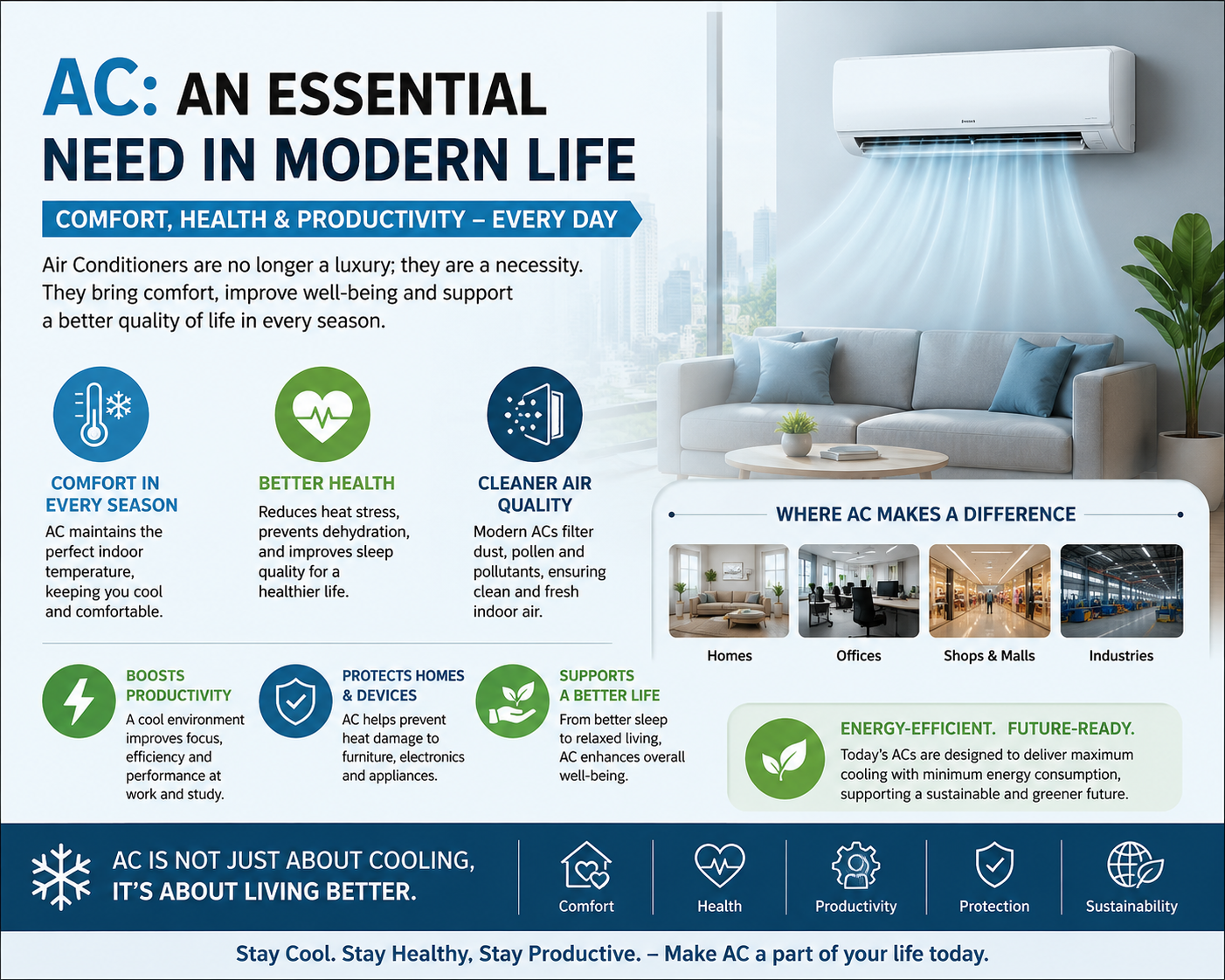
Comfort and Temperature Control>Air conditioners play a vital role in maintaining a comfortable indoor environment by regulating temperature and reducing heat. During hot summer months, they help create a cool and pleasant atmosphere in homes, offices, and public spaces. By keeping indoor temperatures stable, air conditioners allow people to relax, work, and carry out daily activities without discomfort caused by extreme weather conditions.
Improved Health and Air Quality>Modern air conditioners are equipped with advanced filtration systems that remove dust, pollen, smoke, and other airborne pollutants. These filters improve indoor air quality and help protect people from allergies and respiratory problems. Additionally, air conditioners reduce humidity levels, preventing the growth of mold and bacteria that can negatively affect health.
Better Productivity and Performance >A comfortable working environment is essential for maintaining productivity and focus. High temperatures can lead to fatigue, stress, and reduced concentration. Air conditioners create a cool atmosphere that helps employees, students, and professionals perform their tasks more efficiently. This is why air conditioning systems are widely used in offices, schools, and commercial >.
Enhanced Sleep Quality
1. Comfortable Living EnvironmentAir conditioners provide a comfortable indoor environment by maintaining a pleasant temperature throughout the day. During hot summer seasons, they help reduce heat and create a relaxing atmosphere in homes, offices, and public places. This comfort allows people to carry out their daily activities more efficiently and comfortably.2. Improved Indoor Air QualityModern air conditioners are equipped with advanced filters that remove dust, pollen, smoke, and other harmful particles from the air. These filtration systems improve indoor air quality and create a healthier environment for occupants. Clean air is especially beneficial for individuals suffering from allergies and respiratory conditions.3. Humidity ControlHigh humidity levels can make indoor spaces feel uncomfortable and promote the growth of mold and bacteria. Air conditioners help regulate humidity by removing excess moisture from the air. This creates a fresher and healthier indoor environment while protecting furniture and electronic devices from moisture damage.4. Enhanced Sleep QualityQuality sleep is essential for maintaining good physical health, mental well-being, and overall quality of life. Air conditioners create a cool and relaxing sleeping environment by maintaining an ideal room temperature. Better sleep helps improve mood, concentration, and daily performance.5. Increased Workplace ProductivityA cool and comfortable workplace helps employees stay focused and productive. Excessive heat can cause fatigue, stress, and reduced concentration. Air conditioners provide a pleasant working environment that enables employees to perform their tasks efficiently and maintain higher productivity levels.6. Better Health and SafetyAir conditioners help protect people from heat-related illnesses such as dehydration, heat exhaustion, and heat stroke. By maintaining a controlled indoor climate, they provide a safer environment, especially for children, elderly individuals, and those with health conditions.7. Essential in Healthcare FacilitiesHospitals and healthcare centers rely on air conditioning systems to maintain clean and temperature-controlled environments. Proper cooling helps ensure patient comfort, supports medical procedures, and protects sensitive medical equipment. Air conditioning plays a critical role in maintaining hygiene and safety standards in healthcare settings.8. Support for Educational InstitutionsAir-conditioned classrooms create a comfortable learning environment for students and teachers. A cooler atmosphere improves concentration, reduces distractions caused by heat, and helps students perform better academically. Many modern schools and colleges now use air conditioning to enhance the learning experience.9. Energy-Efficient TechnologyModern air conditioners are designed with energy-saving features such as inverter technology and smart controls. These innovations help reduce electricity consumption while maintaining effective cooling performance. Energy-efficient ACs lower utility costs and contribute to environmental sustainability.10. A Necessity in Modern LifeIn today’s fast-paced world, air conditioners have become a necessity rather than a luxury. They improve comfort, health, productivity, and overall quality of life. Whether in homes, offices, hospitals, or commercial buildings, air conditioners play an important role in creating comfortable and healthy indoor environments for people around the world.